Hjorthagshus has a high energy use, among the highest in the country. The high energy use gives a major climate impact and high housing costs. On top of the carbon dioxide emissions from district heating, the stove gas, which is methane gas with a strong climate impact, must be added. Stove gas is also by far the most expensive energy with a price of about SEK 12/kWh. The gas gives the association higher insurance costs and increased risk of fire.
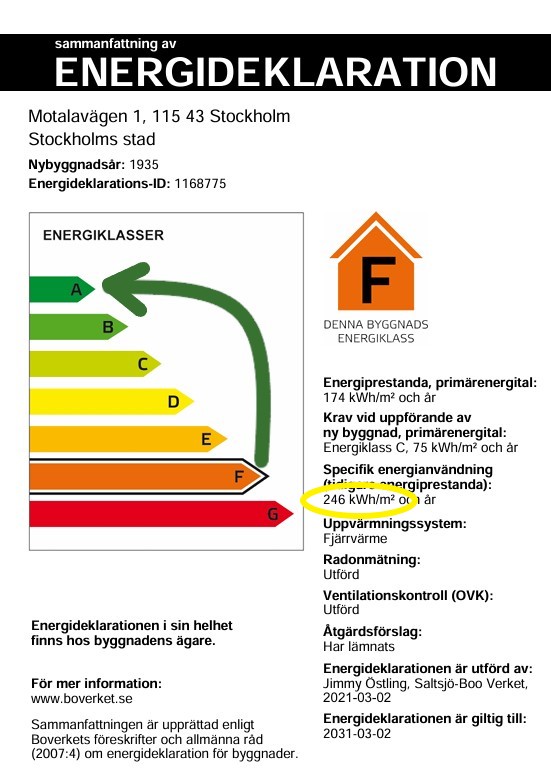
Energy consumption of 246 kWh/m2/year can be phased out in its entirety. The association does not need to buy any energy because the sun provides enough for heating, warm water, property electricity and household electricity. Moving to energy class A will be possible. There will be a surplus of electricity that can be sold, for example to electric vehicles via charging poles. Modern technology for seasonal storage of electricity and thermal energy enables the storage of solar energy from the light months to the dark months.
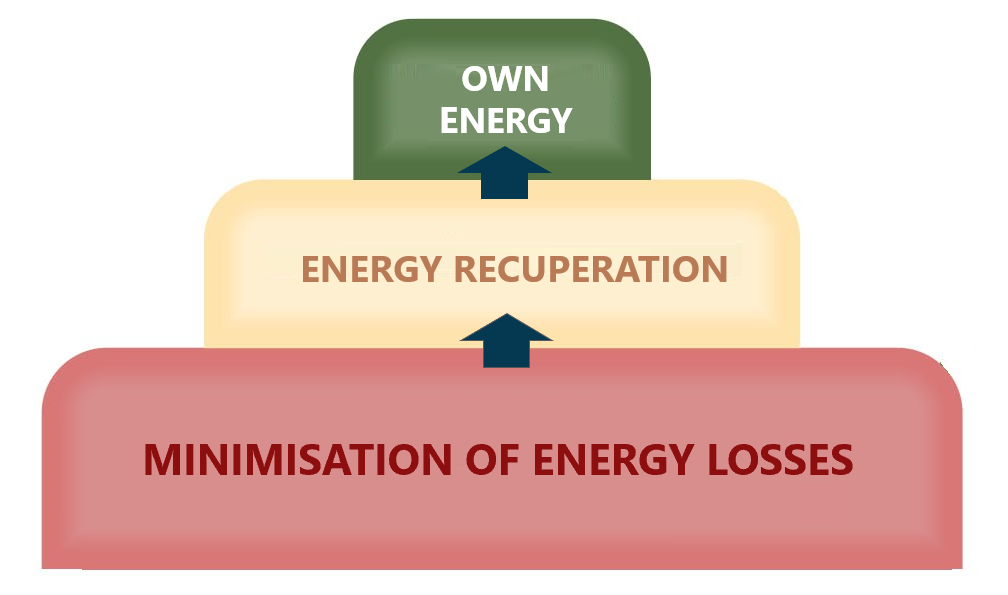
The measures shall be implemented in the order shown below. First, the buildings’ energy losses must be minimized, then heat recuperation shall be installed. Finally, the association achieves energy autonomy with heat pumps and photovoltaics.
Below are examples of places where our buildings lose heat energy. The bright areas show heat losses from the association’s buildings.
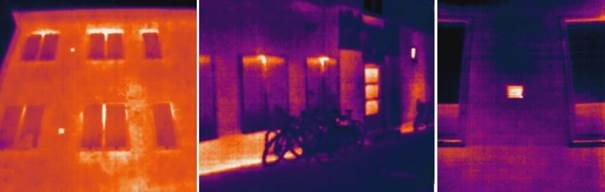
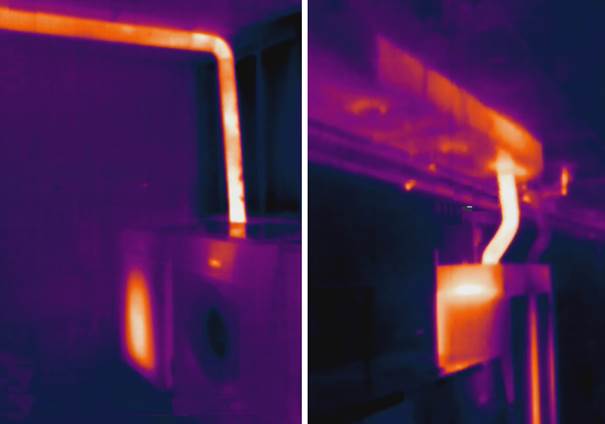
The thermal images show heat leakage that can largely be avoided by improved sealing of the association’s buildings. The two lower pictures show evacuating dryers in the laundry room that use large amounts of electricity and send heated air out of the association’s buildings. Heated air leaving the laundry rooms increases the heating costs. Heat losses via the sewer can be reduced with usually at least 40 percent. After the reduction of various heat energy losses, heat should be recuperated, which can happen an infinite number of times because heat energy cannot be consumed. Below is a heat energy recovery unit in the air leaving the building; The best units return 80 – 85 percent of the heat to the building.
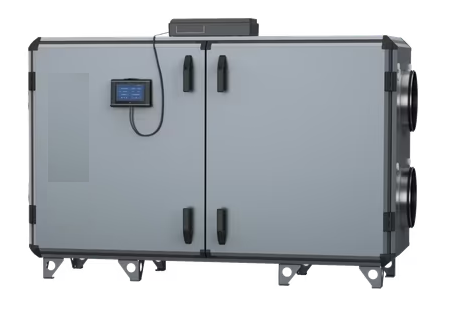
Once energy losses have been reduced and heat recovery installed, our buildings will need about 35 percent of their original heat energy. For a heat pump to deliver this heat energy, about 10 percent electrical energy is required of the association’s original total energy consumption.
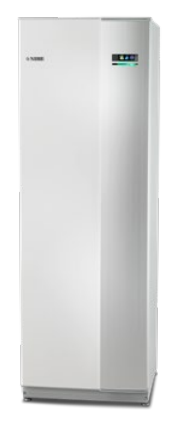
Above a large heat pump suitable for the association. It delivers 60 kW of heat power and has a purchase price of about SEK 300,000; additional costs are enginering work, piping and boreholes.
The association initially used 246 kWh/m2/year. Reducing heat losses has shifted energy use first to about 150 kWh/m2/year, then down to about 88 kWh/m2/year through heat energy recovery. For a heat pump to provide 88 kWh/m2/year, about 25 kWh/m2/year of electricity is required. We can get this electricity from the association’s own roof. The association has 15,600 m2 of heated area, which means that the electricity demand for heating will be about 390 MWh/year.
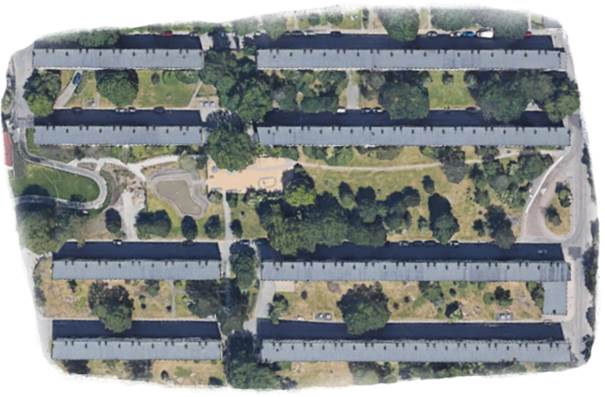
The association’s roofs can produce 950 – 1,050 MWh/year. The surplus of 560 MWh/year is used for household electricity (i.e., sold to members) and for property electricity (circulation pumps and lighting) and laundry rooms. A significant surplus arises. This is sold to charging poles for members’ or visitors’ electric vehicles.
The idea of undertaking all available measures to reduce the purchased energy is not new. In Falun, the housing association Promenaden has reduced its energy purchases by 90 percent and at the same time significantly reduced its costs. Below a film about the association’s work with reduced energy purchases.