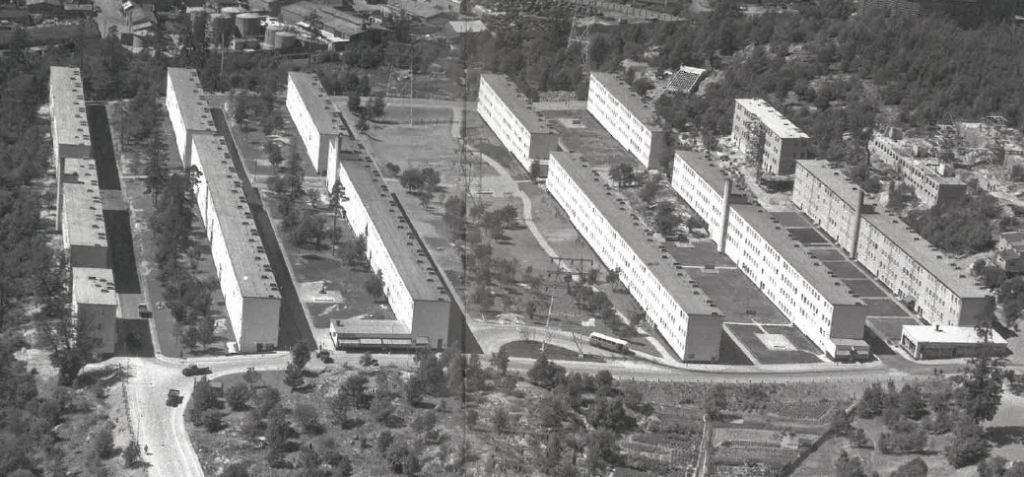
The functionalist houses in “Abyssinia” (Sw: Abessinien) built in 1935 were – inspired by a similar design in Germany – narrow buildings with relatively large wall area in relation to the apartment size. Large wall surfaces, thin brick walls and simple outward-opening windows resulted in large heat losses.
In Mats Rehn’s book “Hjorthagen and around” (Hjorthagen och runt omkring) one can read: “Among the disadvantages was also the unexpectedly high heating costs. Especially the apartments at the gables and on the ground floors turned out to be cold. …/… Three machinists were hired for firing the coal boilers…”
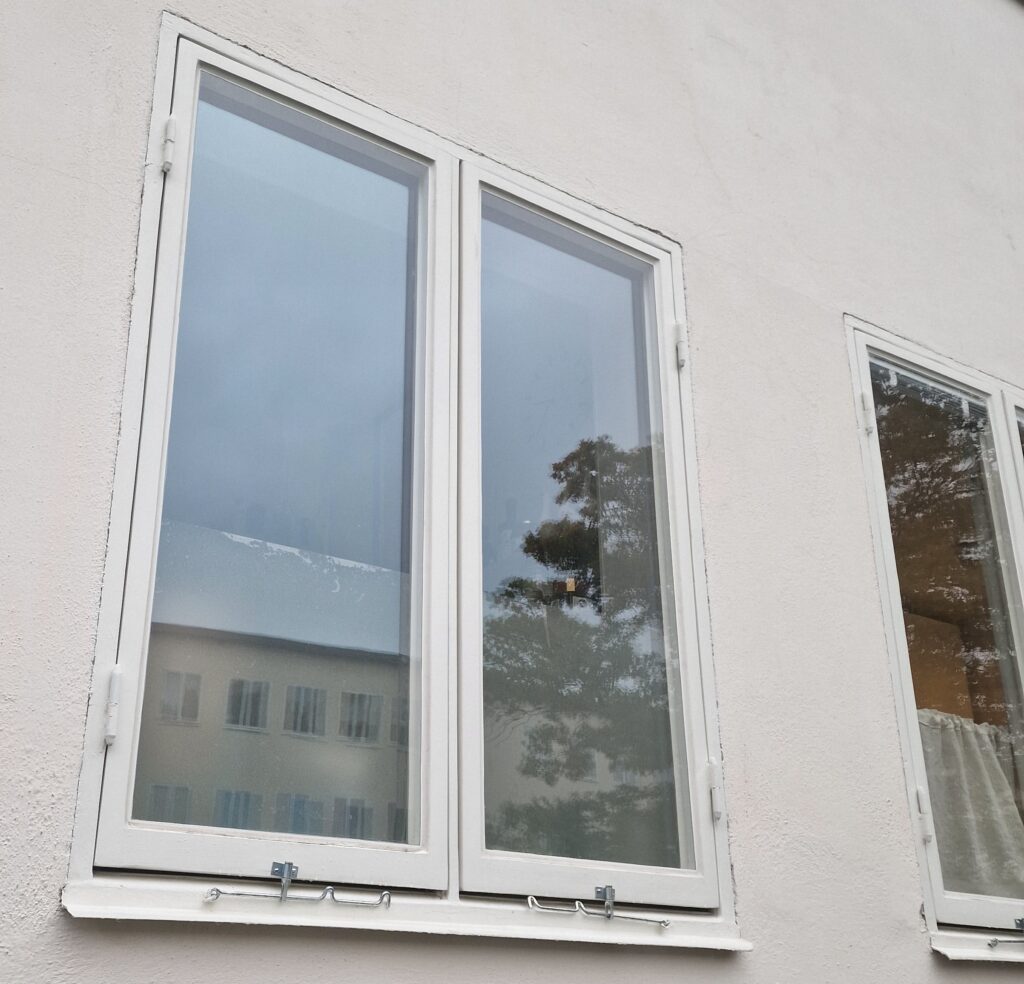
The outgoing single window model resulted in large energy losses. The houses were to be cheap to build, which led to the installation of simpler windows, in the 1930s called “summer cottage windows”. The lower purchase price directly led to high heating costs. Over the years, heat losses have risen because the windows have become warped, which increases leakage. A common measure in older residential buildings is to replace the windows with newly manufactured, identical low-energy windows. The measure reduces energy leakage by 2/3, sometimes more. At the same time, the climate impact falls, housing costs are reduced, and comfort increases.
Various attempts have been made to push the association to take measures for reduced energy losses and reduced heating costs. In 2015, members submitted a written proposal to the board to invest in heat pumps and turn off district heating.
2018 lämnades en medlem ett övergripande förslag till styrelsen att vidta genomgripande åtgärder. Styrelsen fick samtidigt även en lönsamhetskalkyl som visade på de stora ekonomiska vinsterna med minskade energiförluster.
In September 2022, the popular and nationally well-known energy consultant Willy Osciansson visited the association. Shortly after his visit, Willy submitted his report Ecodrive for Hjorthagshus to the association. The message in the report was to reduce heat losses, invest in geothermal heating and cover the roofs with solar cells. The result has been a very limited solar cell installation with low profitability.